

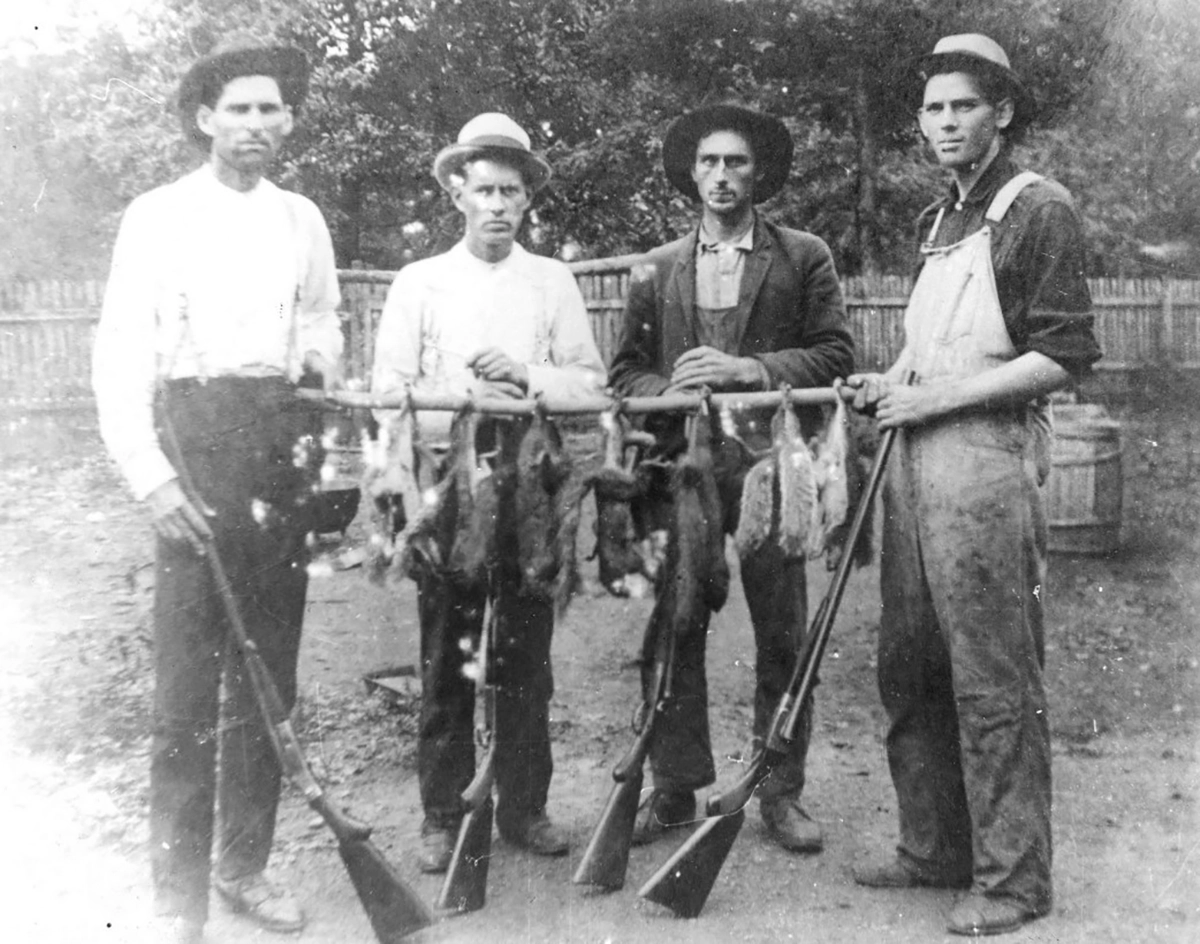
The September/October 2023 issue of the Ohio History Connections magazine, Echoes, included an article by Randy Edwards about Ohio’s Natural Resources. Edwards, a freelance writer from Columbus, noted that “The first non-Indigenous people to explore or settle between Lake Erie and the Ohio River reported a land of great natural abundance, with vast primeval forests teeming with wildlife…” As Ohio, including northeast Ohio, started to become settled in the late 1700’s and early 1800’s, settlers began clearing the forests to construct homes and clear farmland. Some estimates have Ohio at being 95% forested prior to settlement, which was reduced to 12% forest by 1940.
Like other early Ohio settlers, families in the Madison area cleared the old growth forests. Trees were cut down to support the need for timber for building homes, barns, businesses, shipbuilding, and to make charcoal for the iron-producing industry. A Madison area farmer could clear his property to grow crops, and sell the timber to a lumber mill or sell to the Arcole Iron Works to make charcoal. Clearing the land in Ohio had a significant impact on the wildlife population. The extirpation (removal) of large game animals in Ohio is as follows – by 1803 the last of the bison were hunted out of Ohio, eastern cougar gone by 1838, the last native elk had been taken in Ashtabula County in 1840, wolves eliminated by 1842, and black bears eradicated by 1850. White tailed deer and wild turkeys were declared extinct in Ohio in 1909.
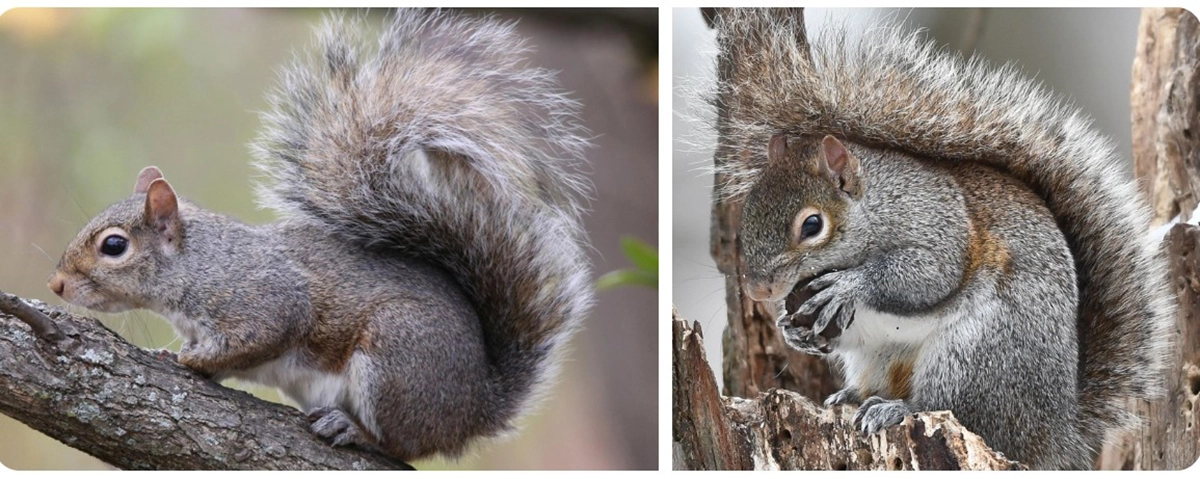
There was one small animal in particular that was affected by the land clearing in Ohio, and the entire Northwest Territory – the Eastern Gray Squirrel. The gray squirrel favored the dense hardwood forests that covered much of Ohio. As early settlers cut nut-and-seed bearing trees that provided the squirrels primary diet, they were forced to find an alternative food source. The squirrels were everywhere — in the fields, in the forests, in barns and homesteads. In Ohio, hundreds of thousands of squirrels swarmed over farmland and destroyed crops the early settlers relied on to feed themselves. The problem was so bad that it was said to cause famine and suffering for the settlers. The book Pioneer Sketches of Madison includes a passage stating “the year 1806 was memorable for the event of the immense multitude of squirrels that infested the forests of the lake townships, devastating the cornfields as they passed on their way in a most savage manner, and contributing much to the scarcity of grains and pork in 1807.”
On Christmas Eve 1807 — five years before Columbus was founded – the Ohio General Assembly passed a law with the following provisions:
“Section 1. That each and every person within this State who is subject to the payment of a county tax, shall, in addition thereto, produce to the clerk of the township in which he may reside, such a number of squirrel scalps as the trustees shall, at their annual meeting, apportion in proportion to their county levies, provided it does not exceed one hundred nor less than ten.
“Section 2. That the trustees shall, at their annual meeting, make out an accurate statement of the number of squirrel scalps each person has to produce, which list or statement shall be given to the lister of personal property, who shall, at the time he takes in the returns of chattel property, notify each person of the number of squirrel scalps he had to furnish.”
Section 3 went on to levy a fine of 3 cents for each scalp short and provided a bounty of 2 cents for each in excess of the number required. Section 4 made it the duty of the township clerk to receive the scalps and destroy them by fire, or otherwise.
The Ohio squirrel tax bounty varied by county. Most counties required every male person of military age to deliver no less than 10, and no more than 100 squirrel scalps. The new tax combined with a harsh winter in 1808 had an immediate effect on the squirrel population, and in 1809 the Ohio Legislature repealed the squirrel scalp quotas. The repeal of the act may have been premature, however. By 1822, an ad in the Columbus Gazette announced a contest for a three-day hunt, with two teams of hunters bordered by the Whetstone and Scioto rivers vying for a barrel of whiskey. The hunt was held September 7th, 9th, and 10th 1822, and according to the Gazette on September 12th, “nineteen thousand six hundred and sixty scalps were produced.” The western district won the contest by more than five thousand scalps.
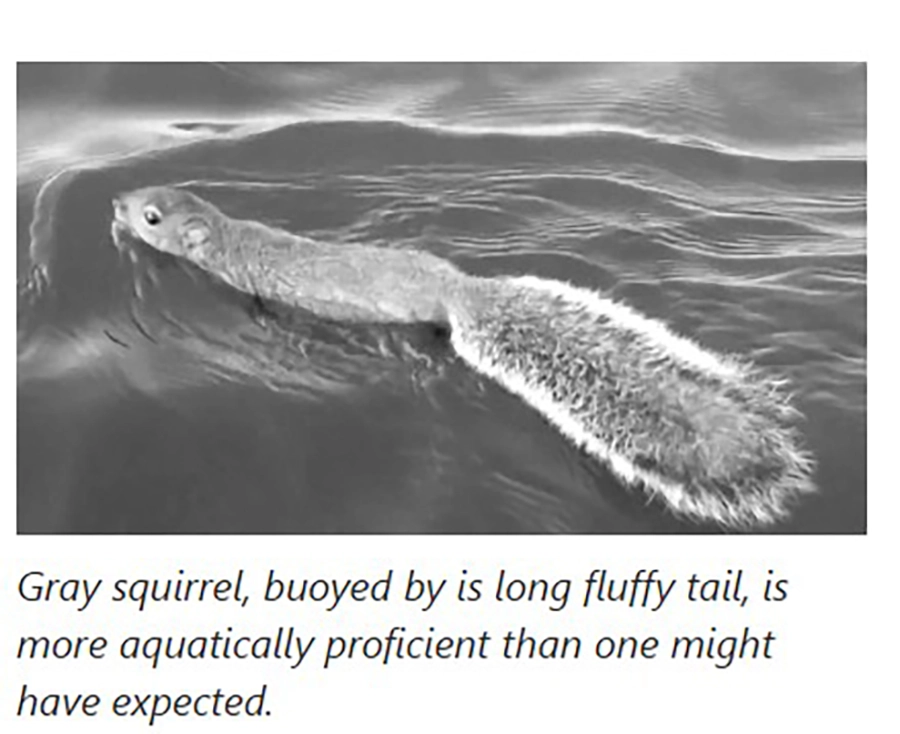
The issue with the Eastern Gray Squirrel population wasn’t unique to Ohio. Huge migrations and crop damage were reported in Illinois, Wisconsin, Michigan, Kentucky, Indiana, Pennsylvania, parts of New England and as far south as the Carolinas, as well as Ohio. The years these migrations were observed in these states were primarily 1807, 1809, 1819, 1822,1842, 1852, and 1856. Meriwether Lewis recorded in his diary of seeing a heavy grey squirrel migration swim across the Ohio River where it meets the Mississippi River in 1803. John James Audubon was convinced that given the great population swell, as well as their ability to swim, these grey squirrels were a different species altogether.
In Ohio, squirrels were the last game animals to get the protection of a limited hunting season, and that didn’t occur until the 1880’s. By then, the squirrel population in Ohio had suffered a notable decline. Thanks to the bag limits and limited hunting season, the Eastern Grey Squirrel population has recovered over the last hundred years – though thankfully, not at the levels seen in the 1800’s!
Submitted by Jesse Devin, Social Media Coordinator Madison Historical Society

The Madison Historical Society is a 501(c)3 corporation, and most donations have tax advantages. You can support MHS through making a donation, shopping with Amazon Smile, a tax-free IRA Contribution, or a gift of Stock.
To make a General donation, Memorial donation, or Capital Fund Drive donation to the Madison Historical Society, please complete the form below and make a payment via PayPal using your credit card or PayPal account. If you prefer to send a check, please make it payable to Madison Historical Society and send to PO Box 515, Madison, OH 44057.
Volunteers created the Madison Historical Society in 1978, and have been essential to the success of our organization! We are always looking for people to help with a variety of activities that keep the society running smoothly. Why not share your enthusiasm, creativity, and talent with us?