

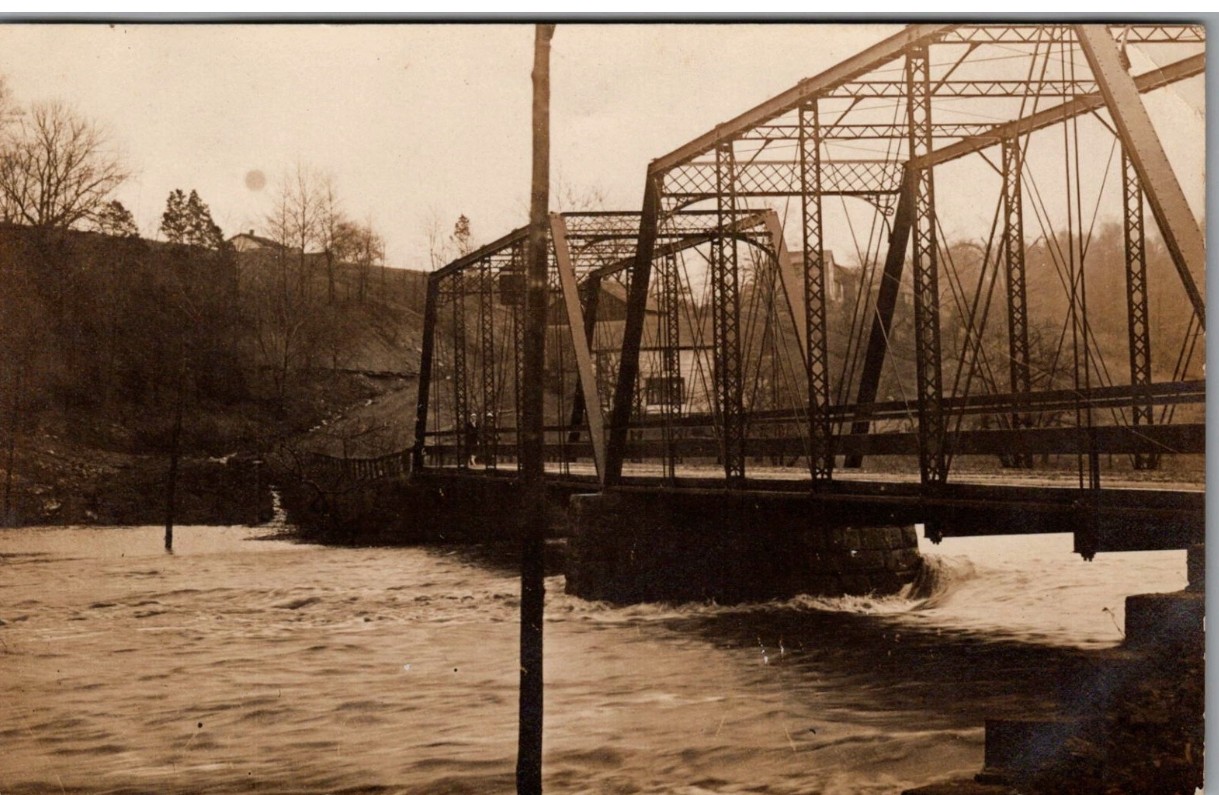
Imagine your children ride the school bus every day, rain, shine, or snow. Now imagine the bus stops at the Grand River, lets the children off, and the driver watches them cross the bridge on foot, because it was too unsafe for the bus to cross the bridge with its passenger load. The deck of the bridge is wood planking with asphalt, slippery when wet, the river is flowing 15-20 feet below their feet, and the kids can see the water rushing beneath them. Once they have crossed the bridge, the bus can then cross, and the kids get back on the bus for the trip to school or home. And finally, imagine being the child who had to make that bridge trek on foot twice a day.
That was the situation in December 1959, after a group of parents with students in Madison schools petitioned the school board to allow the children to walk across. In late November, the bridge had developed a noticeable sag and was closed until emergency repairs could be made – for the third time in several years. The petition read, “We the undersigned demand that our children walk across the Grand River Bridge with police protection on both sides of the bridge, until a new bridge is built. We also want snow fences stretched inside the bridge on both sides.” More than 200 children were transported daily in two buses, with each bus making two crossings in the morning and two in the afternoon. At a school board meeting attended by over fifty South Madison parents, board President Robert Springer explained to the group that no funds were available to the board for policing, and the board was bound by regulations on how they could spend the school’s funds. Lake County Sheriff William Evans agreed to have one deputy and a car at the bridge for morning and afternoon, until the group could get some guarantee from the state that the bridge was safe or a new bridge would be built. On Wednesday, December 16, the students crossed the bridge on foot for the first time. The Madison Press reported that this was not the first time school children had to walk across the bridge due to structural issues.
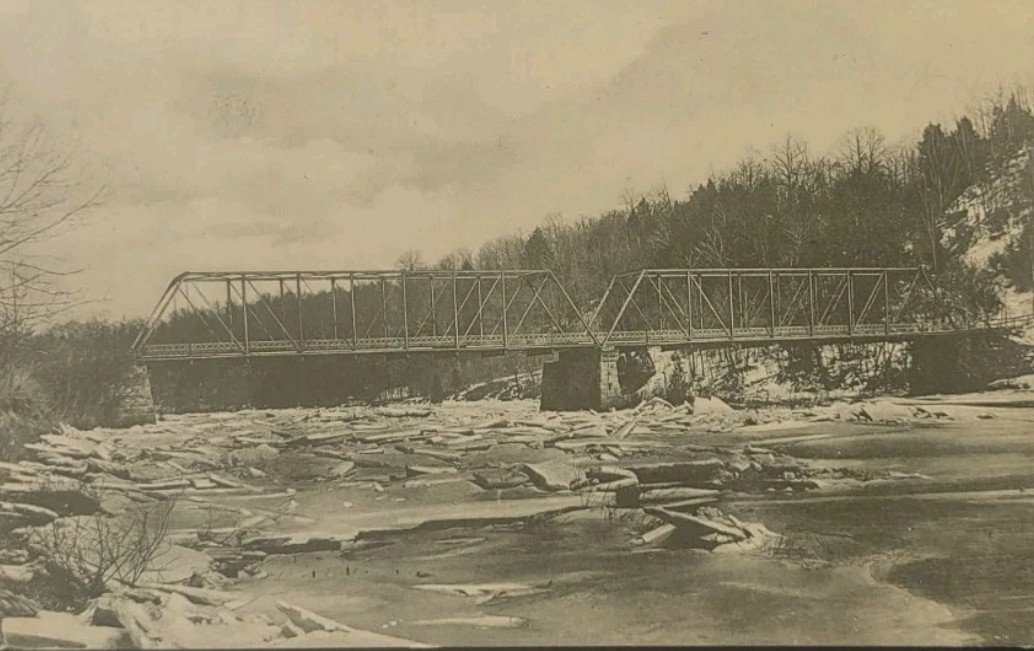
Built in 1893, the single-lane “horse and buggy” bridge over the Grand River was the main route from Madison to all points south, and it was a tedious route. Travelers from Madison had to take ‘old’ Route 528 – south of the village, east on River Road, south on Bailey Road, down to the Grand River, cross the bridge, going up what is now Klasen Road, where it would merge into South Madison Road. The twisting curves on both sides of the river were slick in the winter, and if there was traffic from both directions, one driver would have to wait until the other crossed. The curves made the route difficult for commercial trucks, as well as lengthening response time for police and fire services.
Five women are credited with being the driving force behind getting the old bridge replaced. Mrs. George Johnson was considered the spokeswoman for the group, and she was joined by Mrs. Leslie Jones, Mrs. Kenneth Klasen, Mrs. Betty Bliss, and Mrs. Stanley Trzaska. Together, they organized petitions within the community, made numerous phone calls, sent telegrams, and sent countless letters. They encouraged others within the community to do the same, starting with mass telegrams sent to Governor Michael DiSalle in December 1959. They communicated with Congressman Robert Cook, Senator Milton Cox, and E.S. Preston, Director of the Ohio Dept of Highways, in their goal of getting a new bridge. Governor DiSalle had Preston dispatch his Chief Engineer of Bridges and two aides to inspect the structure. The inspection took place on December 15th , and in a follow-up letter to the families that sent telegrams, Governor DiSalle noted, “He (Director Preston) advises me that there is cause for concern and that immediate steps will be taken to correct any deficiencies …to ensure the safety of the traveling public. A study will be made to determine the possibility of building a new structure.”
Many public meetings were held over the next several months, hosted by the South Madison Civic Club at Urbandale Gun Club on Ford Road. A final public hearing was held by the state on June 6th, 1960, to hear arguments for and against a new bridge. Proposals were presented to the group by the Chief Engineer W.B. Henry, and Location & Design Engineer W.G. Spillburg, detailing a modern bridge. The plans were for $1.4 million to be spent constructing more than a mile of new highway and a high-level bridge, 100 feet over the Grand River and eight hundred feet long. The plan was met by unanimous approval by the over 100 attendees of the meeting. Mr. Henry said the bridge could be started by the end of the year and the entire job completed by the end of 1961. As is typical of public projects, there were multiple delays along the way, and the project was finally let for bid in late April 1961. The bid was eventually awarded to the Bates & Rogers Construction Co., with a completion date of October 1, 1962.
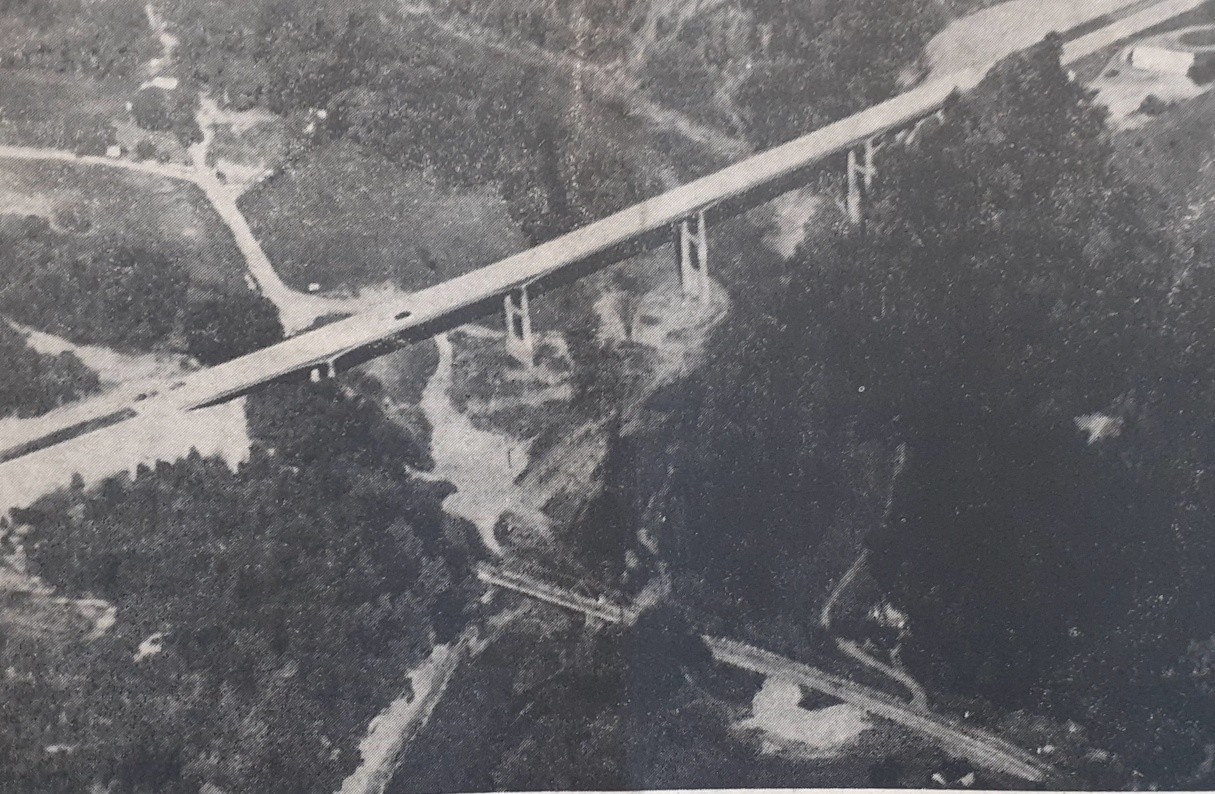
The bridge design called for two 161-foot concrete spans, three 220-foot concrete spans, a twenty-four-foot-wide roadway and two three-foot safety curbs. Including the additional highway, the project totaled a length of 1.46 miles. E.E. Carlson, engineer for the Bates & Rogers Construction firm, noted that there was over 124,000 tons of concrete, 390 tons of reinforcing steel, and 1,220 tons of structural steel used in the bridge. The bridge was 110 feet above the ground, 120 feet above the river bed. The official opening day was set for September 22, 1962.
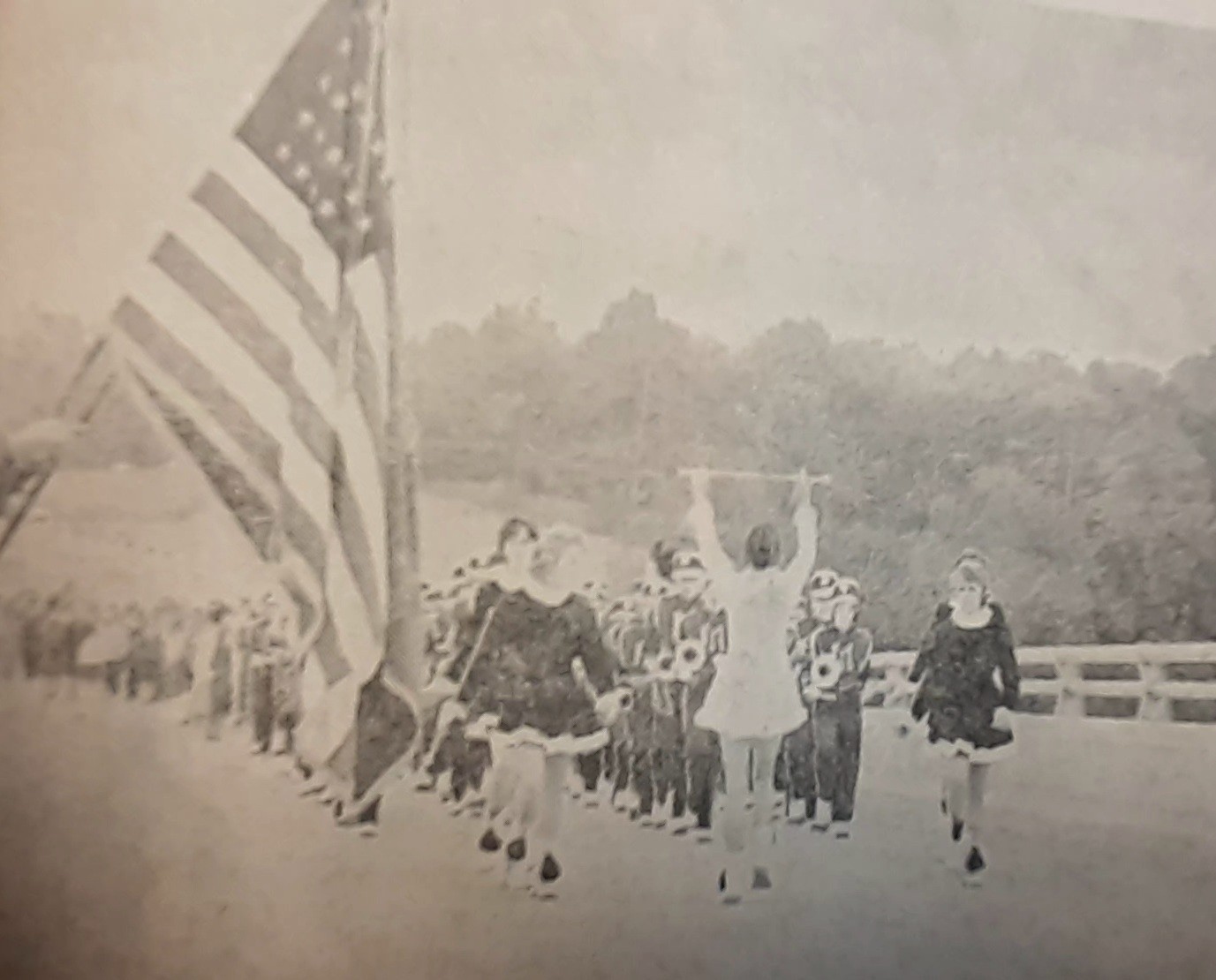
The ceremonies for the bridge were planned by the South Madison Civic Club and Madison Business & Professional Association, with Henry Muller from the Civic Group as Master of Ceremonies. Although the big day started with rain, by the time the ceremonies began at 2:00 pm, the sun shone bright on the assembled crowd. A crowd of spectators lined the north and south ends of the bridge and an elevated platform for speakers and seating for honored guests was situated at the midpoint of the bridge. The Madison High School Marching Band, and Color Guard units of the American Legion Jay Wilson Post 112 and American Legion Post 601 led the procession across the bridge, followed by the National Anthem. Rev. Frank Huetter of Central Congregational Church gave the invocation. The honor for the ribbon-cutting ceremony went to the five women who spearheaded the effort to get a new bridge – Mrs. George Johnson, Mrs. Leslie Jones, Mrs. Kenneth Klasen, Mrs. Betty Bliss, and Mrs. Stanley Trzaska. There were many other dignitaries who attended and spoke during the ceremony, among them E.S. Preston, Director of Ohio Dept. of Highways, representing Governor DiSalle, Congressman Robert Cook, Senator Milton Cox, Lake County Commissioner John Hadden, Madison Township Trustee Milton Nichols, Thompson Township Trustee Earl Chrisman, Montville Trustee Fred Hoffman, Madison village Mayor D. Klingbeil, and Madison Superintendent of Schools A. J. Barr. Many other dignitaries received recognition who did not have a speaking role, among them Madison, Montville, and Thompson trustees, businessmen, county commissioners, educators, and the entire South Madison Civic Group.
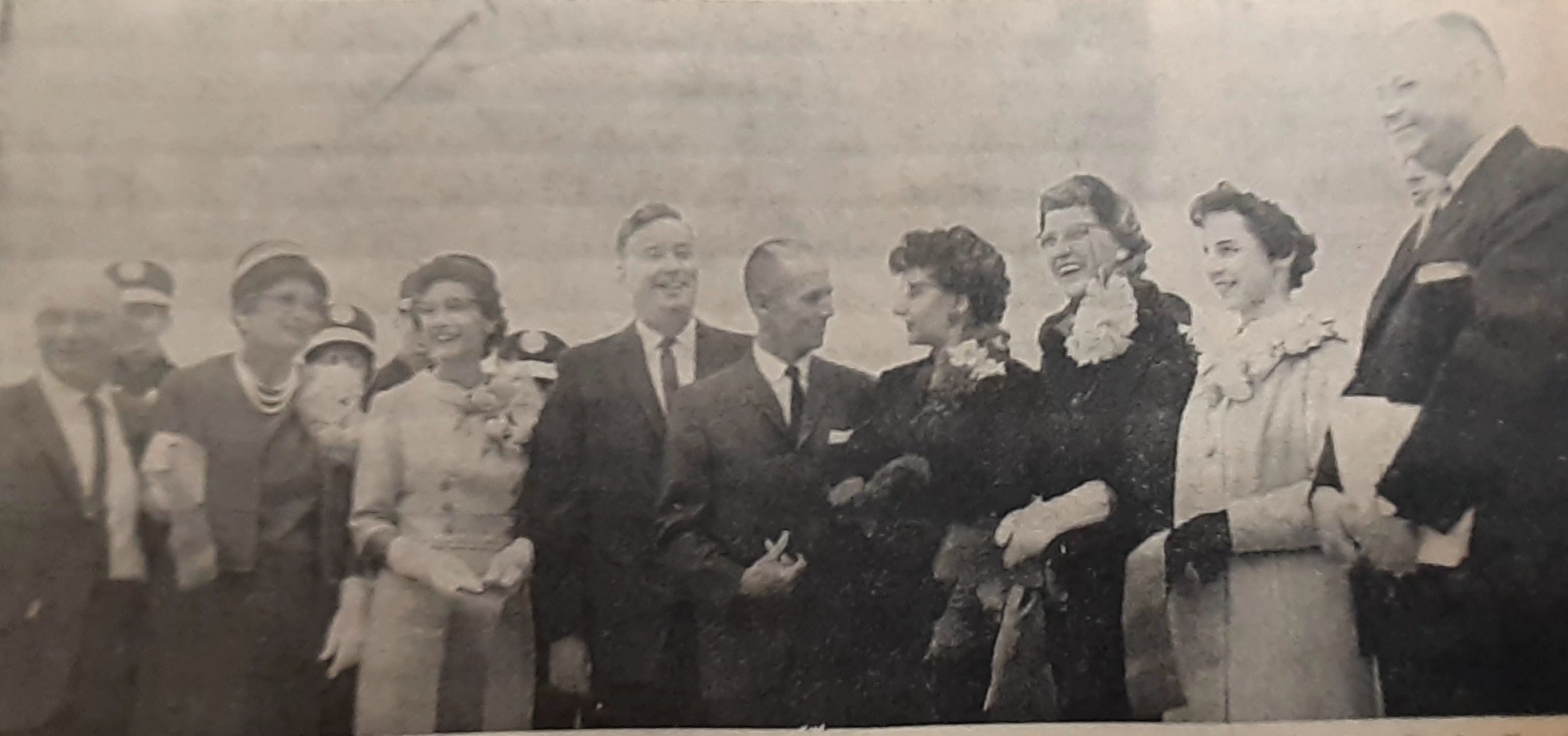
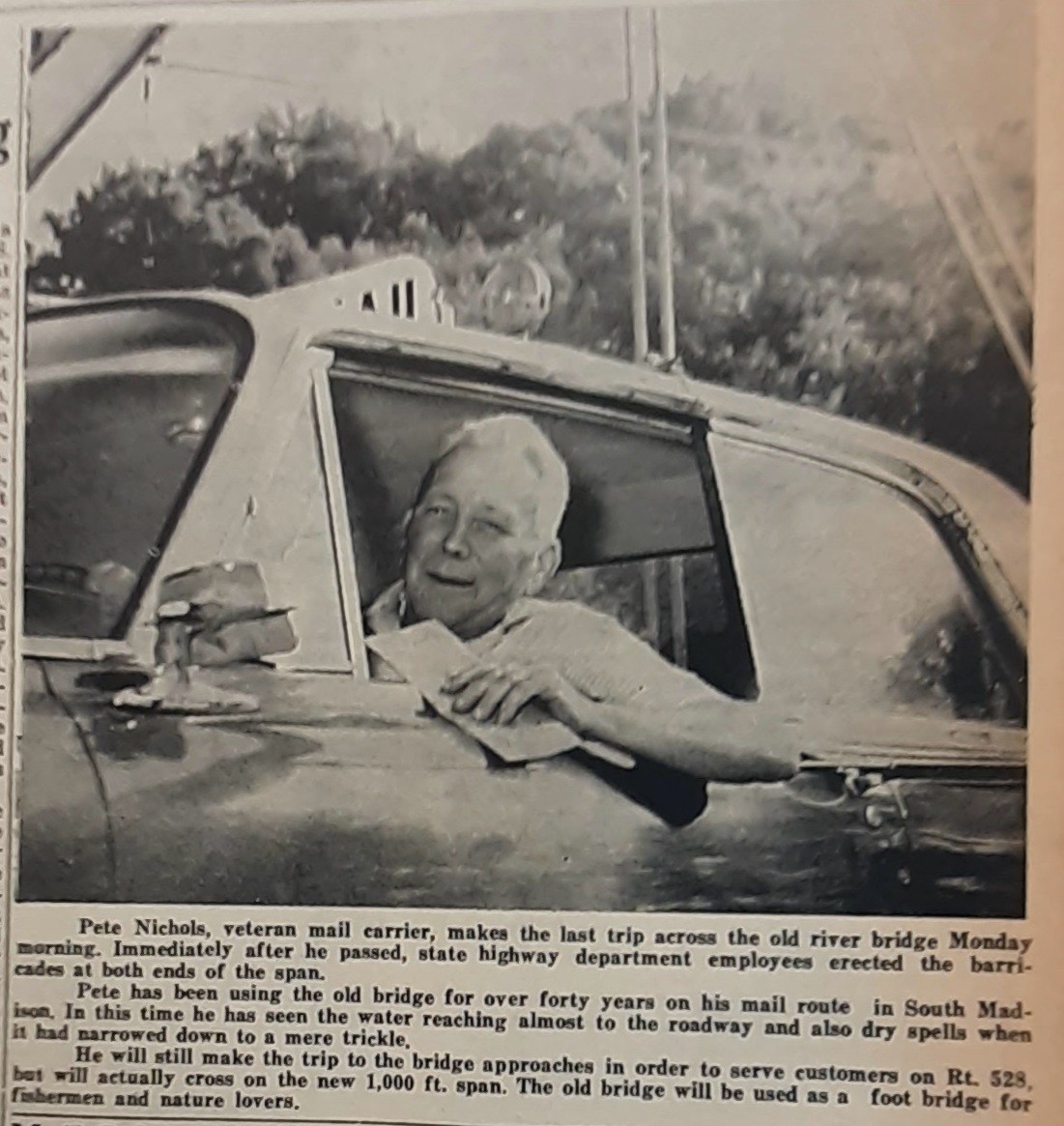
After the ceremonies, the chairs and podium were whisked away, and the first vehicles were allowed to cross the bridge. The marching band gave a concert in the village park, Madison merchants held an “Over the River” sidewalk sale, and treated children to free balloons and cotton candy. The dignitaries were treated to a light buffet at the Old Tavern in Unionville. Later that evening, the South Madison Civic Group hosted an invitational “Bridge Opening” buffet and dance at Ziegler’s Dance Hall in Montville, featuring the music of the Al Sutch band, and entertainment by the Fairport 10 pc. Jug Band. The following Monday, Sept. 24, the last vehicle to cross the old bridge was postal carrier Pete Nichols. After his crossing, the bridge was officially closed to traffic.

The Madison Historical Society is a 501(c)3 corporation, and most donations have tax advantages. You can support MHS through making a donation, shopping with Amazon Smile, a tax-free IRA Contribution, or a gift of Stock.
To make a General donation, Memorial donation, or Capital Fund Drive donation to the Madison Historical Society, please complete the form below and make a payment via PayPal using your credit card or PayPal account. If you prefer to send a check, please make it payable to Madison Historical Society and send to PO Box 515, Madison, OH 44057.
Volunteers created the Madison Historical Society in 1978, and have been essential to the success of our organization! We are always looking for people to help with a variety of activities that keep the society running smoothly. Why not share your enthusiasm, creativity, and talent with us?